

Dueling anniversaries: 1/6 vs 9/11

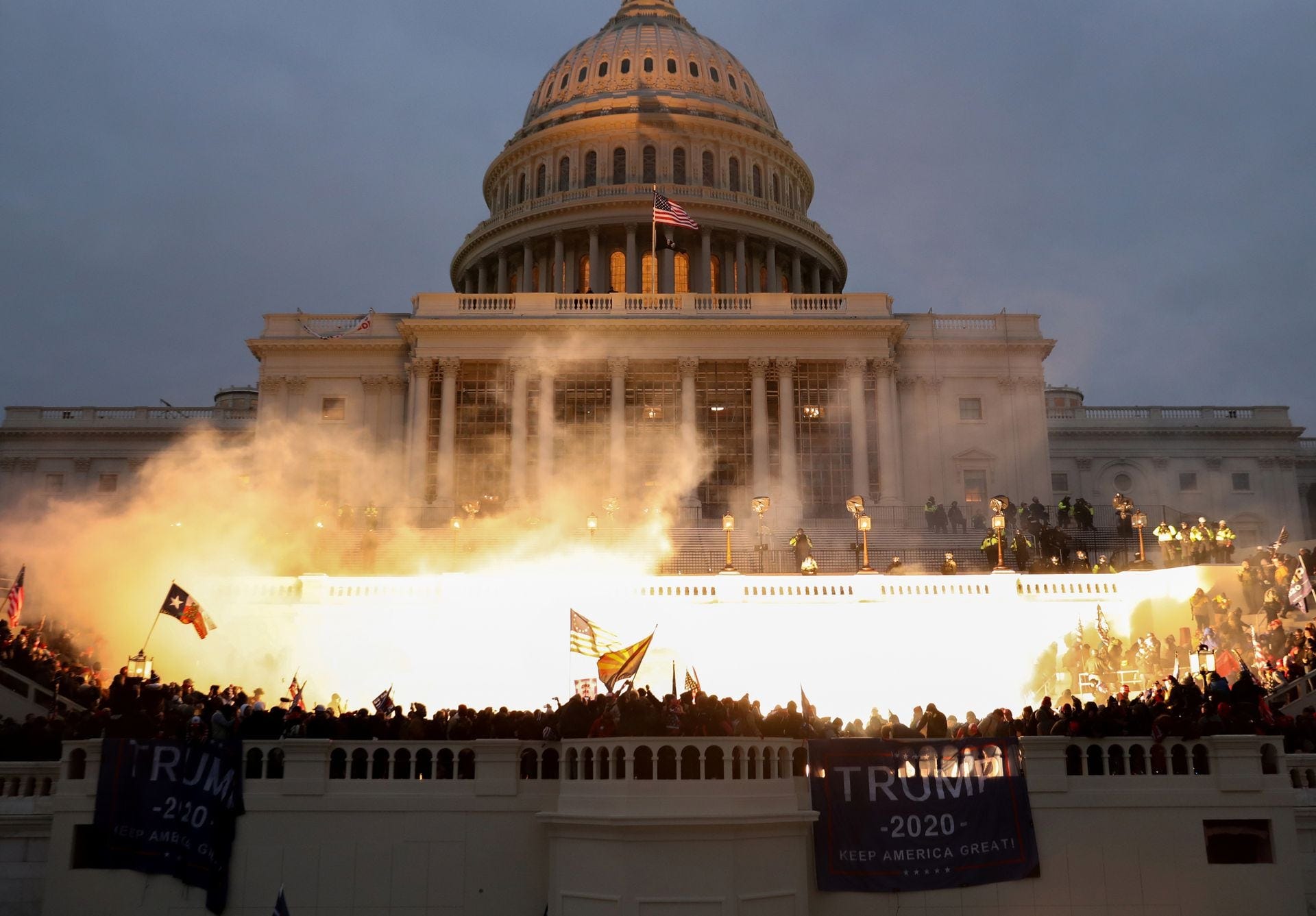
It comes as a sad if not tragic fact that while we as a nation know how to commemorate an attack on our country by foreign terrorists, we have failed when it comes to an attack on us by domestic terrorists. It’s all a bit like a school shooting, isn’t it? We can get an accurate body count, we can learn who is responsible from police, prosecutors, and the courts, but we cannot come to agreement on what caused the terrible incident.
Within days of September 11, 2001, we knew the names of the 19 terrorists who crashed the jetliners into the twin towers, the Pentagon, and a field in Pennsylvania. At the same time we learned that a single man was behind the attacks: Osama bin Laden. A strategy for how to deal with the attack by foreign terrorists on our soil was agreed upon quickly: we would dispatch soldiers to Afghanistan to hunt down those responsible and punish them, beginning with the terrorists’ leader, bin Laden.
We all know that bin Laden was not found and killed until ten years after the attack and that retaliation against others responsible for 9/11, namely the Taliban, went wildly astray over the next two decades. We know that trillions in treasure and thousands of American lives were wasted over the next 20 years, and we know that all we accomplished in the end was a return to the status quo in Afghanistan and further disarray in Iraq, which had nothing to do with the attack in the first place.
But as the saying goes, at least we have not suffered another terrorist attack of the magnitude of 9/11 on our country since then.
Now here we are on the third anniversary of the assault on our democracy that took place on January 6, 2021, and we not managed to make sure that another such attack will not take place in this country, nor have we punished the man responsible for the attack on our democracy in the first place. After a very brief respite during which some leaders in the Republican Party put the blame for the Jan. 6 insurrection where it belongs, on the man who instigated it, the Republican Party took a sharp turn in response to yelps and complaints from its base voters and began a campaign to hide its own Terrorist in Chief, Donald Trump, behind a smokescreen of lies, deflection, and an attack on institutions in our democratically elected government such as the Department of Justice, the FBI, the judiciary, and the current occupant of the White House, President Joe Biden.
The assault on January 6, 2021, was not just a violent attack on the Capitol building that ended up with five dead and 140 police officers injured, some seriously enough to end their careers in law enforcement. It was an attempt to subvert our Constitution and system of government by preventing a peaceful transition of power from one president to another. The attack by al Qaeda on September 11, 2001 was a threat to our way of life, destroying not only lives but businesses, the freedom to travel without fear, and with the partial destruction of the Pentagon, a threat to our national security.
But the attack on January 6, 2021 was worse, because it deepened the fracture of our country into warring political camps and furthered dysfunction in our governmental structures so that shutting down the government by one political party over its inability to pass its political agenda has now become a normal way of doing political business in the Congress.
We are weaker as a nation today than we were after 9/11 in ways that are immeasurable. The angry refusal of Republicans to pass aid to our ally Ukraine in its fight for its existence as a sovereign state against the outlaw regime of Vladimir Putin has weakened the NATO alliance and strengthened enemies of freedom around the globe, from Iranian radicals to Hezbollah in Lebanon and Syria to Hamas in Gaza to ISIS to the Houtis in Yemen to numberless factions fighting governments in Africa and amongst themselves in dozens of countries around the world, including Myanmar, Indonesia, the Philippines, and now even political violence in Bangladesh.
The question is no longer if or when peace will descend into political conflict and violence but how many lives will be lost when it happens. The United States, once a beacon of freedom and stability for other nations to admire and emulate, has descended along with other nations into political conflict, sectarian violence, and threats against the lives of public officials like governors, members of Congress, judges, election officials and even public health officers down at county level. All of this has become what can be called a new political normality, along with mass shootings at schools and lies about public health emergencies like the COVID pandemic and the big lie that Donald Trump won the last presidential election.
We are unable as a nation to commemorate what we lost on January 6, 2021 because one man, Donald Trump, and his political party stand in the way of admitting what we saw with our own eyes: a mob instigated and given aid and comfort by Trump assaulted one of the pillars of our democracy, the Capitol building, and tried to overrun the Senate and the House of Representatives as they carried out the Constitutional duty of certifying electoral ballots and announcing the winner of the 2020 election.
There have been multiple recent stories about how attempts to rewrite what happened on January 6 by manipulating the visual record of Capitol surveillance cameras has “backfired” on the likes of Kevin McCarthy, Tucker Carlson, and now Speaker of the House Mike Johnson. It turns out that images of rioters breaking into the Capitol, attacking police officers, and in one disgraceful instance, carrying a Confederate battle flag through the halls of the Capitol are not easily explained away.
But even that fact has not dented the campaign by Trump and Republicans to deny what we saw with our own eyes. Now the Washington Post and New York Times both, in covering dueling speeches by President Biden on Jan. 5 at Valley Forge, Pennsylvania and Donald Trump at a rally the same day in Sioux City, Iowa, are saying that the two campaigns are arguing not just about politics but reality itself.
What was real on September 11, 2001 was that the World Trade Center fell to the ground and the Pentagon was severely damaged and that thousands of Americans lost their lives to a terrorist attack by al Qaeda. What was real on January 6, 2021 was that the Capitol was violently attacked by domestic terrorists and our government came close to falling to a would be dictator.
All of us saw both attacks with our own eyes. That we cannot agree on what we saw on January 6, and instead a significant minority believes what they are told by a congenital liar and cheat, is something we will be living with throughout this election year. No matter how this election turns out, we and the rest of the world, will have to live with our failure for years if not decades to come.
It has taken us at least a century to begin to properly commemorate the disaster of the Civil War by taking down Confederate statues and renaming military installations for patriots instead of traitors. Here’s hoping it won’t take just as long for us to commemorate 1/6 with the unity and propriety that we commemorate 9/11.
Correction: in sixth graf, 2001 for 2021. Ooops. Too many twos and ones and zeros
All RIGHT! We need you LKTIV, and here's some good news from January 6 litigation posted just yesterday, it's a hammering down on the seditious insurrectionists they never expected, that's for sure:
https://law.justia.com/cases/federal/appellate-courts/cadc/23-3023/23-3023-2024-01-05.html?utm_source=summary-newsletters&utm_medium=email&utm_campaign=2024-01-06-us-court-of-appeals-for-the-district-of-columbia-circuit-5555f8b581&utm_content=text-case-title-1
Justia Opinion Summary
In the case before the United States Court of Appeals for the District of Columbia Circuit, Russell Alford, who was a participant in the Capitol protest on January 6, 2021, appealed his convictions and sentence for four misdemeanors. The misdemeanors were related to his unauthorized entry and conduct within the U.S. Capitol. Although Alford's behavior while in the Capitol was neither violent nor destructive, he was convicted for his role in disrupting the Congress's electoral certification and endangering public safety.
Alford raised two issues in his appeal: the sufficiency of the evidence to support his convictions for disorderly or disruptive conduct and the reasonableness of his twelve-month sentence. The court affirmed his convictions, noting that a jury could rationally conclude that his unauthorized presence as part of a mob contributed to the disruption of the Congress's proceedings. The court also affirmed his sentence, stating that the district court was within its discretion in imposing a within-Guidelines sentence after considering the circumstances.
The case underscores that disorderly or disruptive conduct, as defined by relevant statutes, can include non-violent and non-destructive actions if they are likely to endanger public safety or create a public disturbance. Even passive conduct can be deemed disorderly or disruptive, depending on the context. The court also emphasized that sentencing disparities among defendants with similar records who have been found guilty of similar conduct are not inherently unreasonable, especially when the defendant's conduct during trial or other factors may justify a greater sentence.
****** Full text of the judgment in downloadable PDF is there, too, collect them all, amaze your friends and stun and confuse the usual suspects, too!