Shaking hands with a corpse

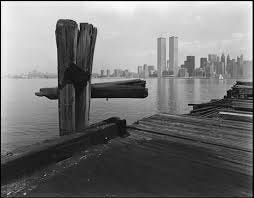
They say memories come to you for a reason. I don’t know if that’s true, but it should be. What I’ve found myself thinking about lately is the night I found the body of a man floating in the Hudson River. I didn’t know why the image of that night appeared to me so clearly until one afternoon, I decided to go back through the columns I’ve written recently, and there they were: the photos of Donald Trump over and over asleep in his chair in the Oval Office with his eyes closed, lips drooping, head lolling. He looks dead, eerily like the face of the corpse I found in the Hudson River over 50 years ago.
Something changed in me that night. I guess you have to find a body and touch it to come that close to death, to feel the skin, to look closely at a dead person’s face with its pale, sagging skin and lifeless closed eyes.
It’s not as if the memory stays with you constantly. It doesn’t. With your own life to live, in my case, 55 more years of it, the memory fades into a dark corner where sadness plays out its presence in the rest of your life.
I was 24 when it happened in the summer of 1971. I was living on a Pennsylvania Railroad barge that a friend of mine and I had converted into two huge lofts by building a wall across its width separating it in half. The thing was huge – 80 feet long and 30 feet wide, with a five or six foot deep deck at both ends. The barge had doors on the side we used 2-by-4’s to frame into huge floor to ceiling windows with about 9 panes of glass each. The two windows in my end of the barge looked down the river to the south and east straight across at Manhattan’s Upper West Side. We walled off a bathroom and a kitchen, and on my end of the barge, two bedrooms with windows cut into the outer wall using a circular saw that we framed up and glassed in similarly to the large windows on the other side. The place was heated by a coal burning potbellied stove, which worked fine until the cold really hit hard in December and January and February. We picked up 50-pound bags of what they called “pea coal” near the docks down in Hoboken and moved them down the old deteriorating dock using hand-trucks.
The barge sounds more romantic than it was. Living there took a lot of work. It was scary when storms came in and white caps peaked on the river and the rain blew sideways against the windows.
I found a guy who sold me a 14-foot wooden runabout for $200 that had a 25 horsepower Mercury engine dating to the early 1950’s, but it ran reliably and powered the little craft up and down the river with ease. It would have been nice to take the runabout across the river to work in the mornings, but back then, there was no place to tie-up or rent a slip other than the 79th Street Boat Basin, and they charged $100 a month, way out of our price range. So we drove to Manhattan every day through the Lincoln Tunnel and parked in the Village near the Voice.
Summer on the river was as wonderful as you would imagine. With no air conditioning, we kept windows open and a breeze cooled by the Hudson’s waters blew through the place making life even on the hottest days tolerable. My friend Howie from West New York who installed and repaired elevators in Manhattan got me a horizontal refrigerator with a sliding glass top from a deli that was going out of business on Bergenline Avenue, and I picked up an old gas stove for a few bucks at a junk store on the west side of North Bergen. I taught myself how to cook that summer in the brick-floored kitchen using a paperback French cookbook I bought in Brentano’s on Eighth Street for 75 cents. I’ll never forget the night we made pork chops piquant with a Dijon mustard sauce and served it with rice and sautéed green beans and garlic. I had no idea that you could make food at home that tasted so startlingly delicious.
On the weekends, I would take the boat down to the Morton Street Pier in the Village and pick up friends and take them back to the barge for dinner, or we would just sit on the back deck of the barge and drink Rolling Rock beer and watch the lights of Manhattan come on in great swaths of yellow in the night.
I was coming back from dropping someone off at Morton Street one Saturday night, blasting along, paying close attention to the water so I wouldn’t hit any floating debris, when something white and bulbous caught my attention in the water. I had seen everything floating in the Hudson – wooden pallets, old wooden doors, bags of garbage, dead fish, chunks of foam, derelict ice chests, you name it. But the white thing was different. I spun the boat around and slowed down and looked for it.
The lit-up buildings in Manhattan created long fingers of light on the water. There it was, floating in one of the long strings of light. I pulled alongside and idled the engine. It was a man’s back in a white t-shirt. He was face-down with his arms and legs dangling lower than his torso. With the right angle in the light from the shore, I could see the back of his head, his hair floating free from his scalp.
I looked around to see if there were any boats nearby. There weren’t. I didn’t know what to do, but I felt somehow responsible for the body. A Saturday afternoon, maybe he went fishing, or fell off a dock, or capsized a canoe, or was swimming and got caught in the current and couldn’t swim back to shore. The Hudson is powerful. The river’s water moves at 3 miles an hour with an outgoing tide and at 1.5 miles per hour upstream with the incoming tide. Somewhere up-river, there was a family, maybe a wife and kids or parents, who were probably wondering where he was.
I decided I had to do something, so I knelt down on the bottom of the runabout and leaned over the gunwale and grabbed one of his arms and tried to pull him into the boat. He was too heavy, of course, so all that did was turn him over. Still holding his hand, in the light from the buildings of Manhattan, I could see his face. He looked to be in late-middle age, with pudgy cheeks and a wide forehead and thick neck. His eyes were closed.
I let his hand go and grabbed onto his t-shirt, holding him next to the side of the runabout as I looked around again for another boat. About 100 yards away, a tugboat was moving downriver at a good clip. I yelled and waved my free arm, but they didn’t see me, so I let the corpse loose and put the engine in gear and sped over to the tugboat. They saw me waving and slowed to a stop. I told them about the body and pointed across the river to where I thought the current had probably moved him. The tugboat captain asked for my name and said he would report it to the Harbor Patrol.
I hit the gas and headed for the barge. In a few minutes, I was tying up alongside the deck. I climbed on board and went inside and grabbed a beer from the fridge. Suddenly, I felt dirty. I had touched a dead body! I held his hand!
I went into the bathroom and stripped off my clothes and got in the tub and turned on the shower. When I installed the tub, I cut a window in the side of the barge from the top edge of the tub to the ceiling, right where you stood with the water coming down on you. There was nothing out the window but the river and Manhattan. I soaped up and was standing there in the shower letting the water run over me when suddenly I was hit by a gigantic spotlight through the window, and I heard my name: “Lucian! Lucian! Is that you in there?”
It was the Harbor Patrol shining a big Xeon spotlight on the window where I was in the shower. I waved at them and motioned toward the end of the barge. Over the loudspeaker, they asked if they could tie up and come aboard. I signaled yes and got out of the shower and put my bathrobe on.
They had to file a report, so I made some coffee for the Harbor Police, and they interviewed me. I asked them how they knew my name. They said the tugboat captain called in my report of the body on the radio. Then it occurred to me – how did they know where I lived? “We know everything along this river,” one of them said. “It’s our job.”
The Harbor Patrol guys promised to come by and tell me if the body was found, but I never found out who he was or how he had drowned.
I spent that winter on the barge. The pipes froze for 11 days. I had to carry bottled water to the barge, along with the bags of pea coal, and I took a couple of showers at my friend Howie’s up on the Palisades in West New York. That winter was enough for me. I found a loft for rent on Houston Street in what would become known as Soho and moved back to the city in the spring, taking my possessions but leaving the barge.
Holding the hand of a corpse is not something you easily forget. Neither is looking at a dead man’s face as he floats in the Hudson River in the lights from New York City. My relationship with that river changed in a serious way after that. The Hudson had taken a man’s life. Every time I got in that runabout and went out on the river, I made sure it would not take mine.
It would be nice to say that finding a dead body in the water gave me a sense of my own mortality, or changed my attitude about death, but it didn’t. I was 24. I never saw another corpse after that night, but I can still see the man’s face in my mind’s eye. He wasn’t at peace. He drowned. He was floating in the current of a big and powerful river.
That is powerful. The river, they told me back then, claimed a lot of people…some by their own choice, some not. Two years before your experience, police brought a body taken out of the river to Bergen Pines County Hospital in Paramus. That’s where I was a student in radiology….was gonna be an X-ray technician. We were tasked with x-raying the body, to look for evidence of possible “ foul play,” as they say. A body in the water, for weeks, maybe months. Horrible what the water does. It is something you don’t forget, even if you have become accustomed to touching dead people.
Sometimes, the things that stay with us can shock people who hear about them. I can walk in your shoes, Lucian. To find a person in the river…It would be one of those moments seared into memory, for sure.
Mortality…if only all of us, everywhere, could fathom the reality of it, perhaps without having first to experience that reality— a death—among us. Would we be less cavalier about some things, then? Things like guns? Things like war?
Mmmmm.
Thank you for sharing this very personal story, Lucian